METAGRAPH
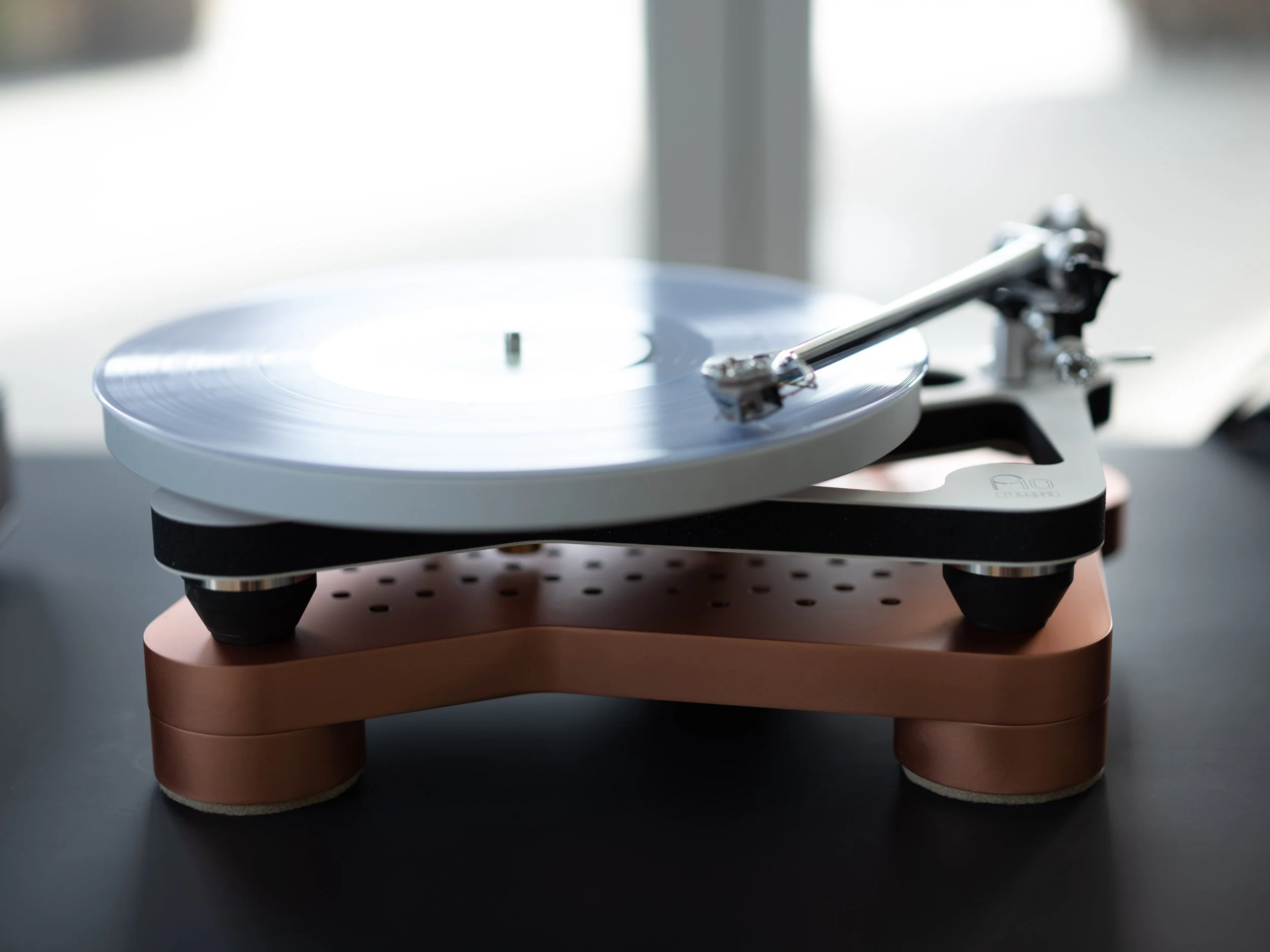
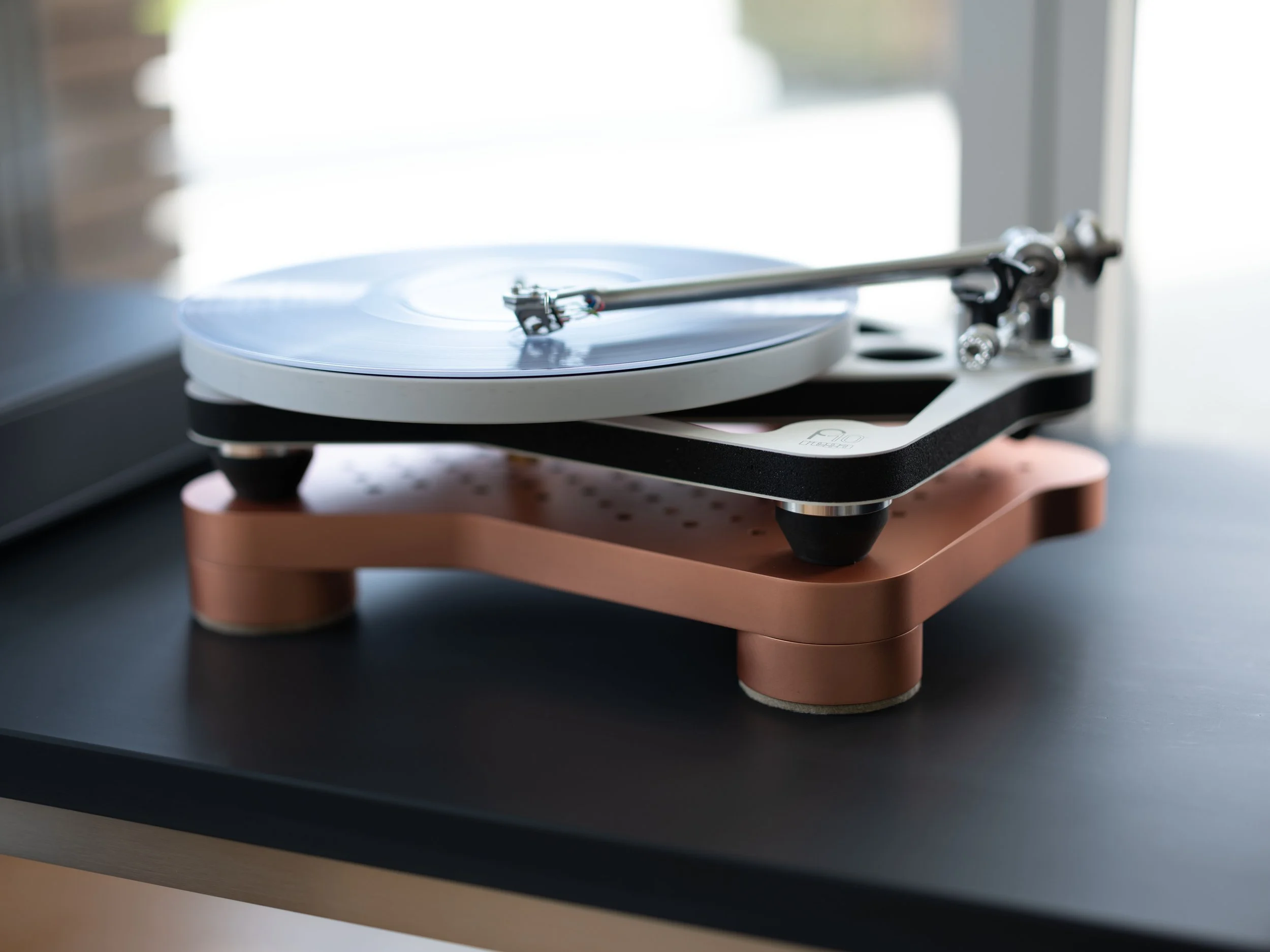
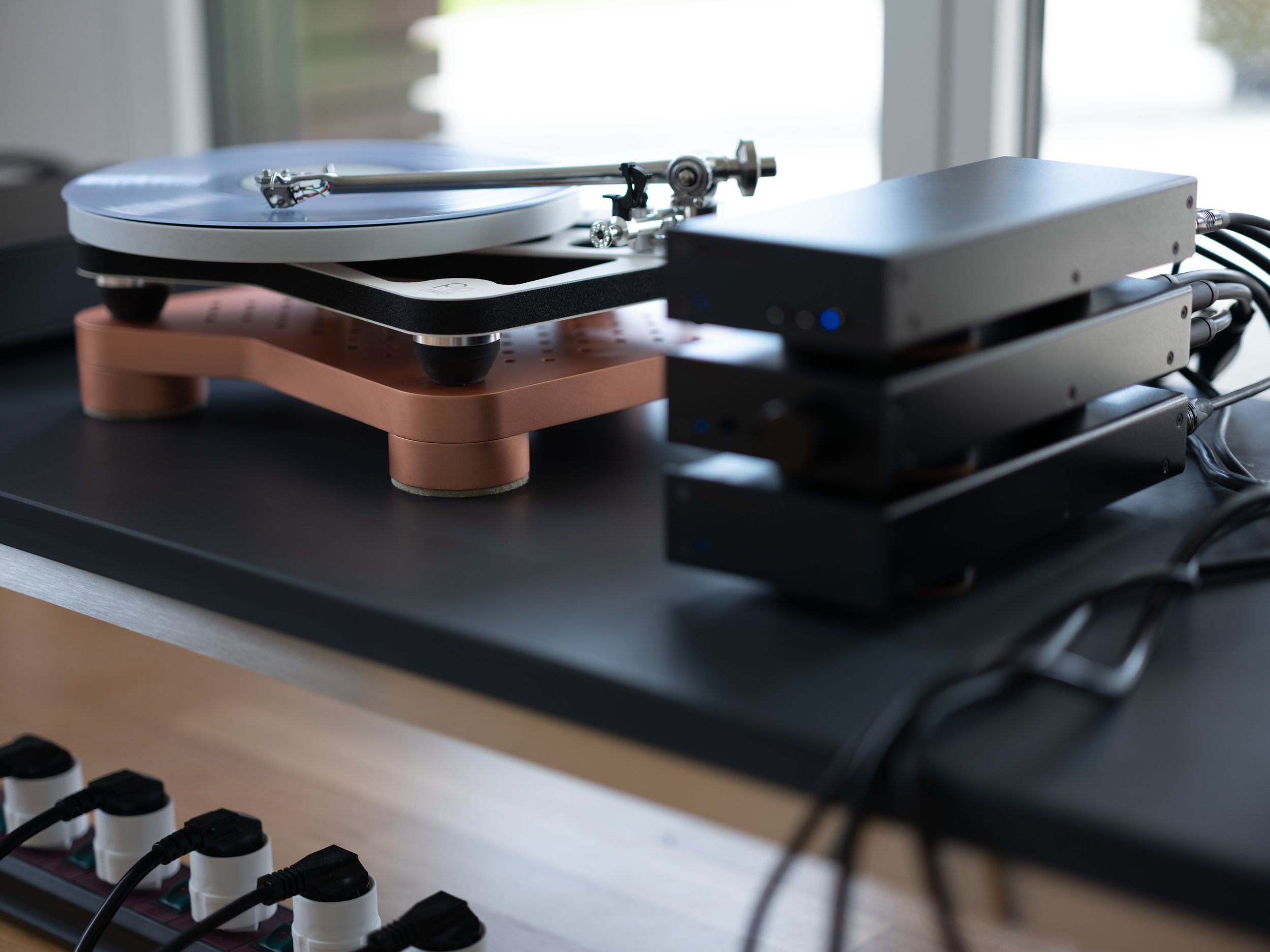
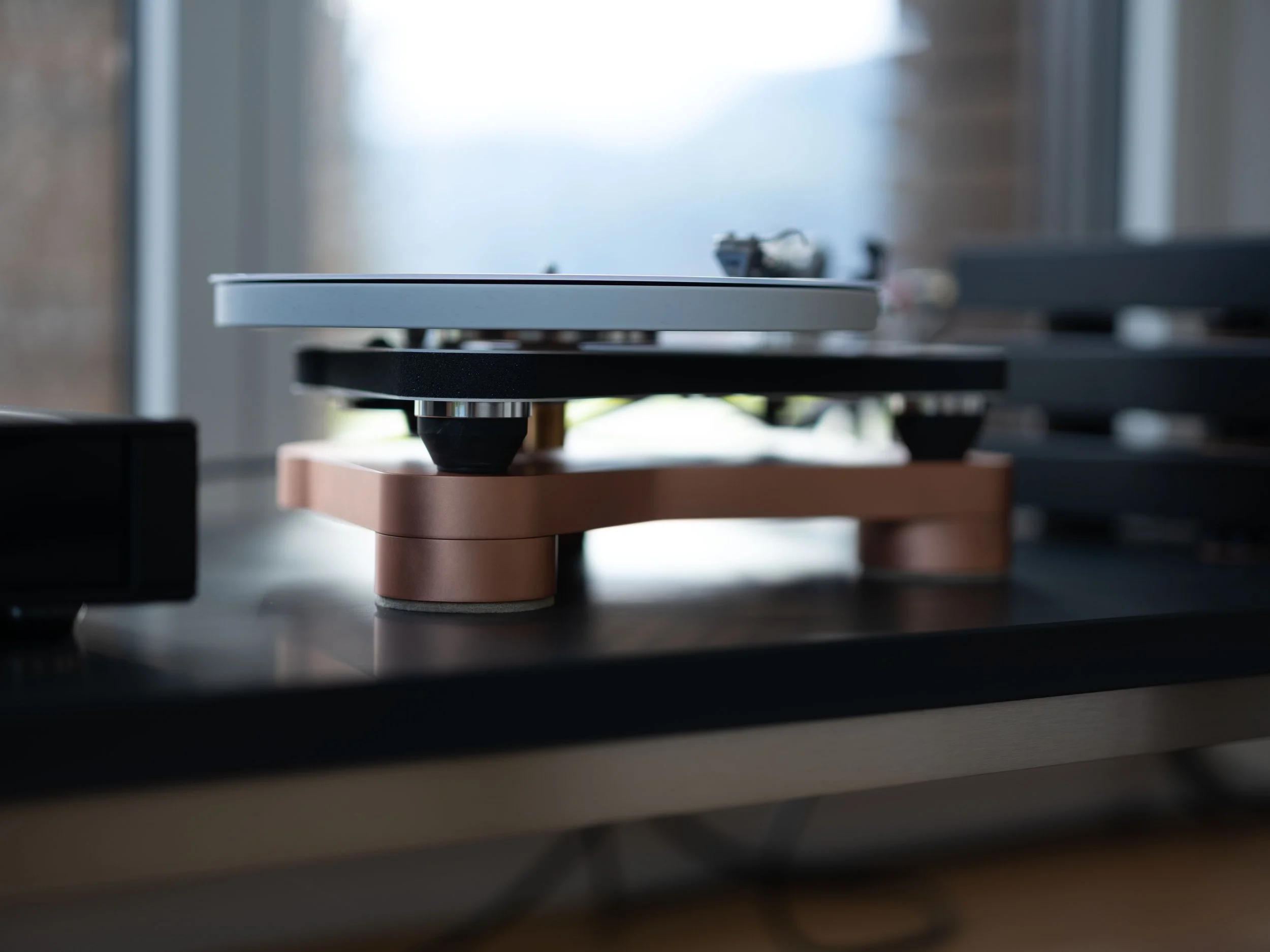
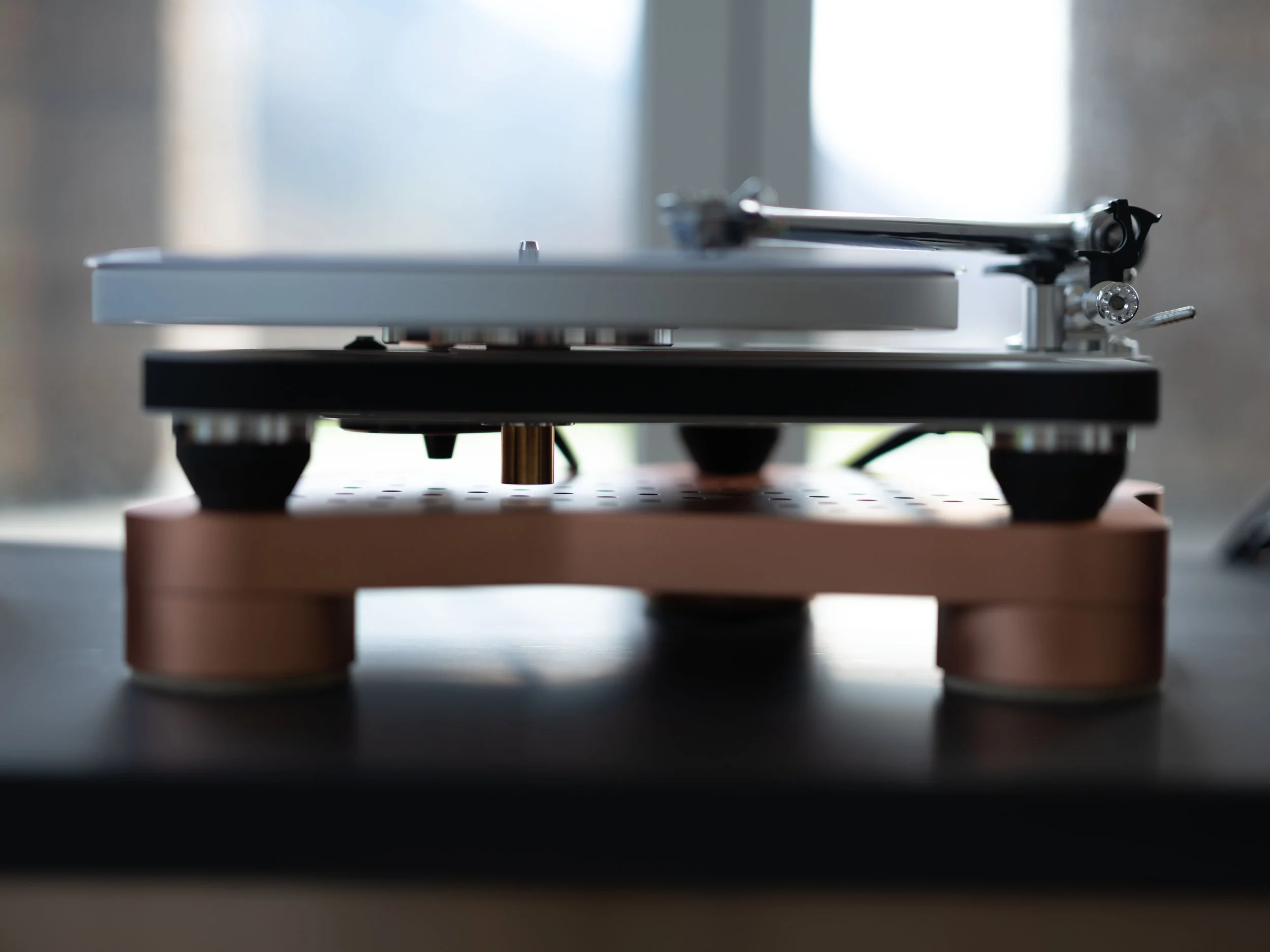
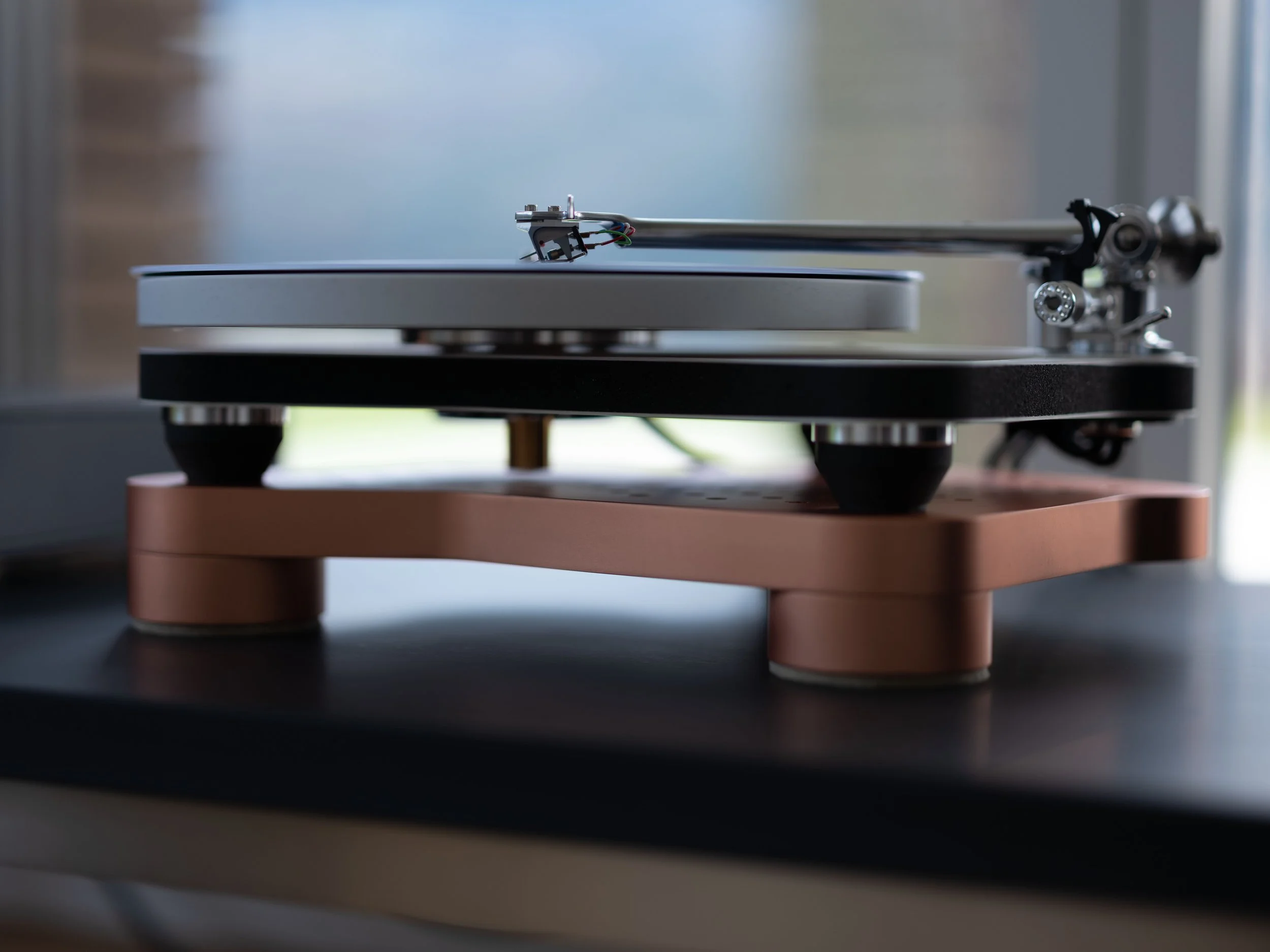
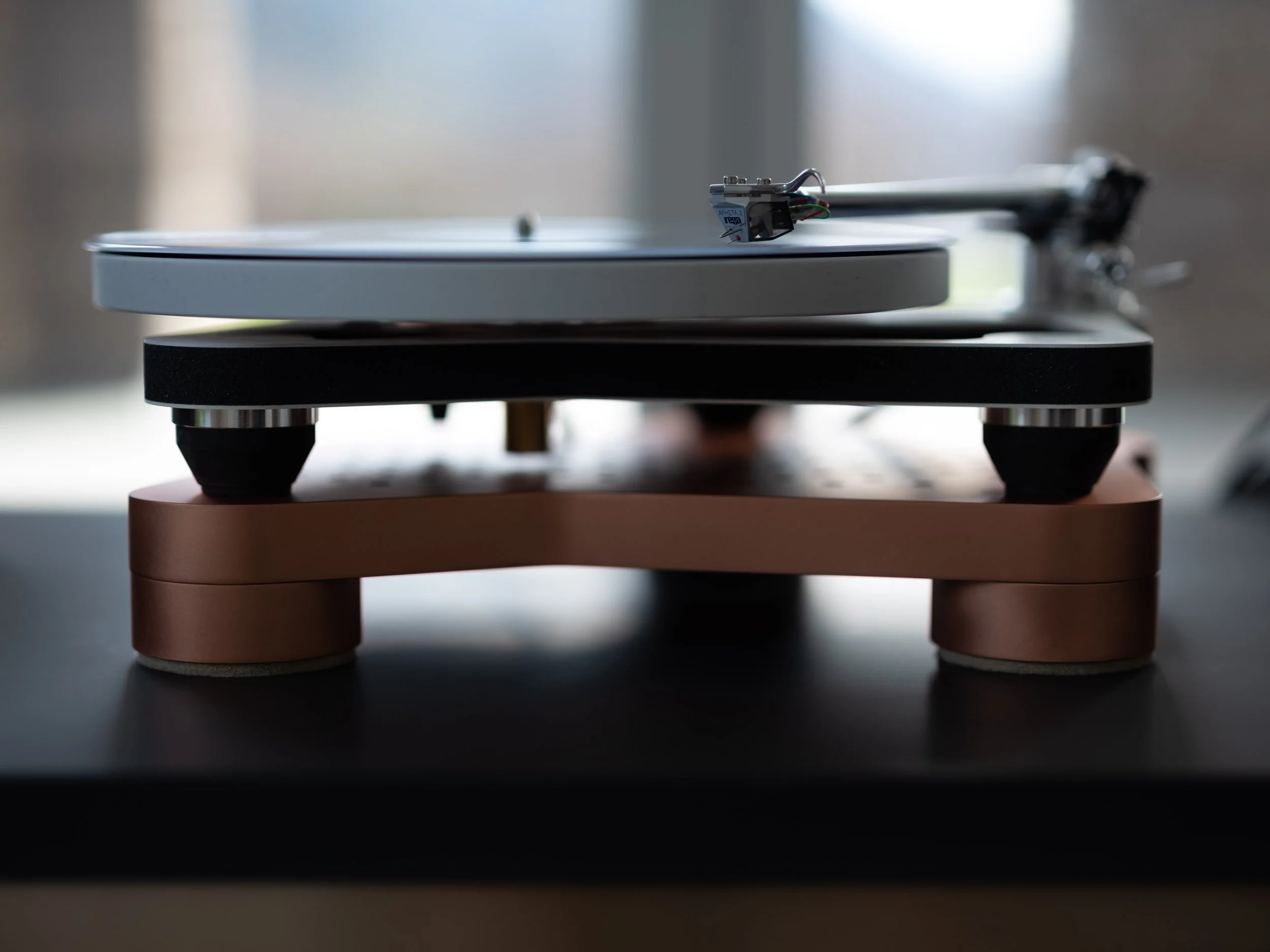
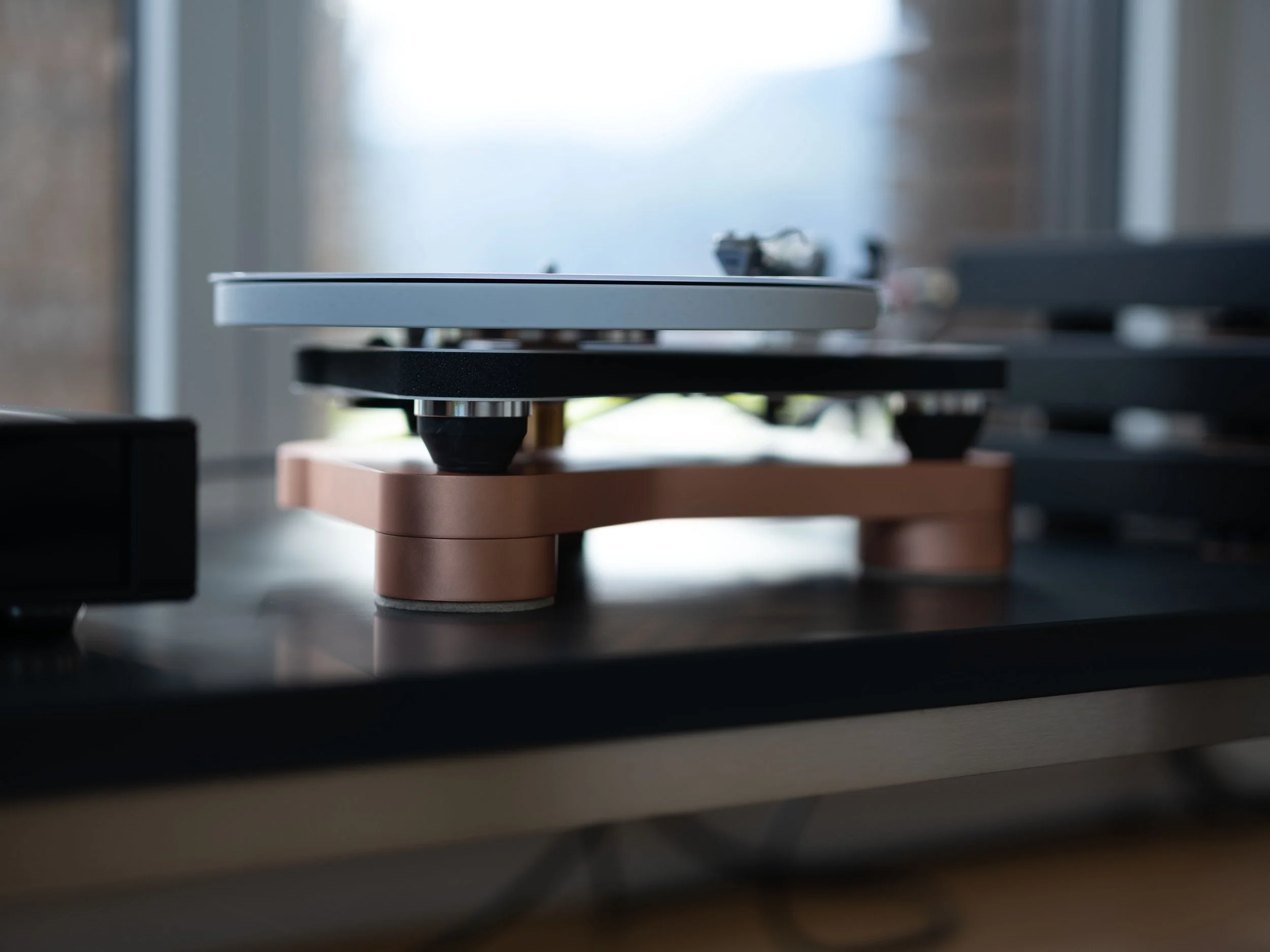
THE TURNTABLE BASE FOR THE REGA P10 made of copper
HOUSING AND MATERIALIZATION: Solid copper base, partially perforated for acoustic purposes, swirl finish, matte clear coat
TO RECEIVE; the REGA P10 (HPL-coated Tancast 8 foam core plinth, upper and lower ceramic struts, ceramic oxide platter, and RB 3000 tonearm), power supply unit separate
REGA P10: Height 115 mm; Width 420 mm; Depth 350 mm; Weight 4.7 kg; Weight power supply 3 kg
DIMENSION AND WEIGHT: Height 50 mm; Width 369 mm; Depth 282 mm; Weight 23 kg
MANUFACTURE: Housing: Goldau-Switzerland, Liberec-Czech Republic | Titanium: Muotathal-Switzerland, Ludersdorf-Austria, Hong Kong-SAR-China | Copper parts: Muotathal-Switzerland | Upholstery work: Liberec-Czech Republic | Loudspeaker chassis: Northampton-UK, Akishima-Japan | Inductors: Fredensborg-Denmark | Capacitors: Fredensborg-Denmark | Resistors: Fredensborg-Denmark | Cables: Saco-USA, Altdorf-Switzerland | Speaker terminals: Bandon-USA | Assembly: Zürich-Switzerland, Brunnen-Switzerland
SWISS ✚ MADE | proudly made in Muotathal
Edgar Villchur's approach to turntable bases and mechanical isolation in general, as implemented primarily from 1961 onwards, was based on a very clear, almost minimalist principle: “The only movement that really causes interference is the relative movement between the turntable platter and the tonearm pivot.” All other movements (of the base, the floor, the furniture, the air through the speakers) are only problematic if they cause this relative movement. Villchur's core approach to turntable bases: The base is not there to be as rigid and heavy as possible, but to remain as motionless as possible relative to the vibrating system. Therefore, the important system (platter + tonearm) is actively decoupled from the base, which can be contaminated without issue. The decisive factor is the relative movement between the platter and the arm - everything else is secondary.
According to Roy Gandy's approach to turntable bases, which he has consistently pursued since the 1970s and continues to apply to his current models, Roy Gandy fundamentally regards a turntable as a “vibration measuring machine.” The only truly relevant movement is the relative movement between the stylus and the groove. Any unwanted vibration that interferes with this relative movement degrades playback quality, whether it be motor vibration, bearing noise, impact sound, or acoustic feedback. Minimal mass and maximum rigidity (low mass, high rigidity): The base should be as light as possible, but at the same time extremely rigid so that it does not build up any natural resonances in the audible range and does not store any energy. Unlike Villchur, Gandy rejects a spring-loaded subchassis design. Instead, everything is rigidly coupled (base, bearings, platter, tonearm base). The rigidity ensures that disruptive energy is not stored, but immediately dissipated or not built up in the first place. The base should have as little mass as possible so that it does not store interference energy and release it again with a time delay. Instead, it must be extremely rigid so that the entire system (bearing, turntable, tonearm) acts as a single, indestructible measuring instrument. He rejects heavy, rigid, mass bases (as found in many devices from the 80s/90s) because they absorb energy and thus lose musical detail. Gandy's philosophy is: “Less mass equals less stored interference equals more music” – implemented through lightweight, highly rigid, lossy, and increasingly skeletonized plinths without any spring decoupling.
The antagonistic approaches of Edgar Villchur and Roy Gandy seem incompatible. The METAGRAPH's design represents a third approach, using a non-retaining support base (no fixation) to ensure even deeper, controlled bass with immediate response.